Common challenges, common thinking
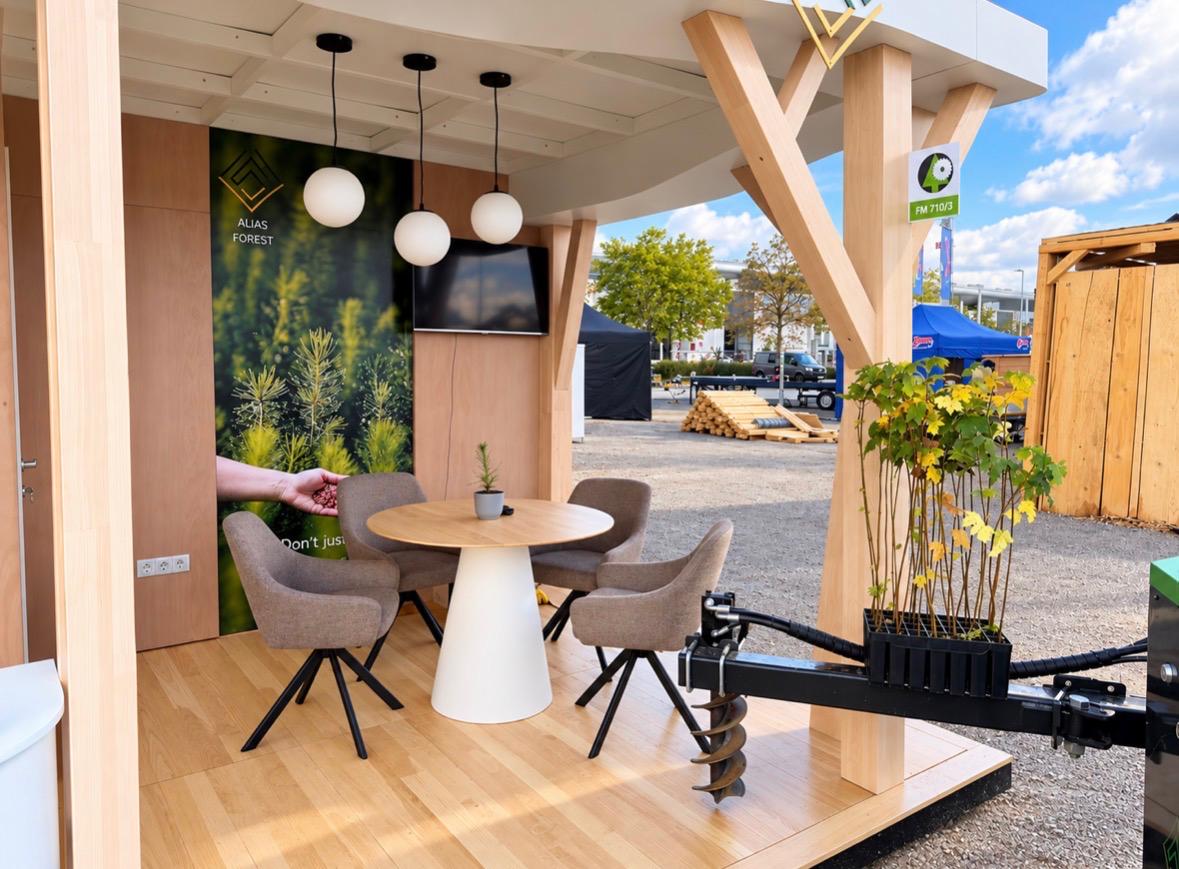
One of the most valuable parts of the exhibition was the professional dialogue that developed between exhibitors and professionals from various countries. At Interforst, it became clear that we are not alone in facing numerous problems. The labor shortage, the need to increase efficiency, adapting to changing climatic conditions, and the growing mechanization of forestry work raise similar questions across multiple countries. That is precisely why those conversations were especially valuable, where not only ready-made solutions were discussed, but the problems themselves as well. Sharing professional experiences, learning about different approaches, and jointly evaluating innovation opportunities provided a perspective that a company would find harder to gain solely from its own day-to-day operations. At INTERFORST, numerous new, valuable professional relationships were born, and several cooperation opportunities took shape that we wish to pursue in the upcoming period.
“The path we have taken is good”
We also asked Attila, the director of Alias Forest, about his impressions of Interforst.
“For me, one of the most important takeaways from Interforst was that we, the exhibitors, did not merely appear alongside each other, but regarded one another as genuine partners. We shared our experiences, uncovered common problems, and worked together to seek solutions that could provide long-term answers to the challenges facing the sector. Throughout the discussions, it became increasingly clear that one of the decisive directions for forestry's development will be mechanization. Behind this lies not just technological advancement. The labor market has also transformed significantly, and we must adapt to this. Today, the question is no longer solely about the cost associated with a given solution, but also how we can carry out the work with the human resources available to us in a long-term sustainable, reliable, and adequately efficient manner. It was a distinctly good feeling to forge new professional contacts, learn about diverse experiences, and think together about the direction in which the industry is heading. For me, a particularly important piece of feedback was feeling that Alias Forest is on the right track. We are not lagging behind, nor do we need to wait for solutions from the outside. We have our own developments, we have innovative ideas, and we were able to discuss them openly, exchange opinions, and compare them with the experiences of others. If asked whether I would attend the next Interforst, my answer is a definite yes. We might not yet be able to quantify exactly what direct financial result this exhibition brought us, but its intellectual value is indisputable to me. It gave courage, confidence, and self-assurance. It reinforced that the path we have embarked upon is good. Our task now is to consistently walk this path to the end and have the perseverance to continue building what we have started.”
A direction worth following
After Interforst, we see even more clearly that there is no single solution to the changes facing forestry. Modern seedling cultivation, proper planting technology, mechanization, digitalization, and decades of professional experience can complement each other to provide answers to the challenges the sector must face today and in the coming decades. Alias Forest wishes to remain an active participant in this process. For us, Munich was not a closed chapter, but an important piece of professional feedback. It demonstrated that we are looking for solutions in the right place, and that the developments of recent years are also relevant within an international professional setting. And now, we return to what we know best: to seedlings, to afforestation, to developments, and to the work whose results are not seen overnight.